
Lots of people try growing seeds from the purple passionfruit you buy in supermarkets. This is Passiflora edulis (not P. caerulea which is the blue flowering hardy form you will be familiar with – unfortunately some big companies have been marketing it as edulis).
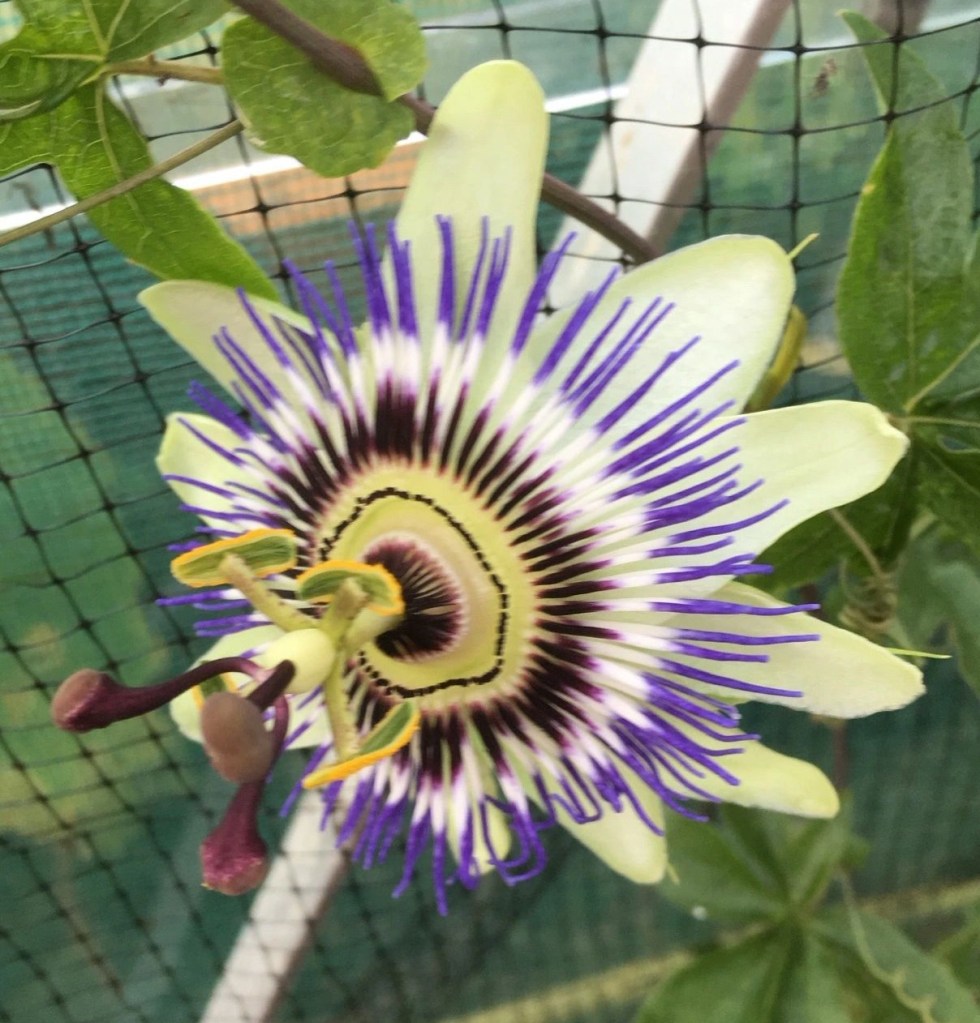

Initially this works well and seedlings develop quickly into great big plants with wonderfully glossy leaves.

Unfortunately this is as far as it goes as during the summer they wilt and collapse no matter much they are moved around.
They are sensitive to temperatures above 30 degrees Celsius or so as well as nights that are too cool and this constant wilting-moving-recovering cycle to find a place in its ‘Goldilocks zone’ means that even if flower buds develop they rarely reach maturity. As a result even the experts have given up on trying. But we are made of sterner stuff, aren’t we? With a little thought, a bit of background reading and careful growing we should be able to succeed where others have failed.
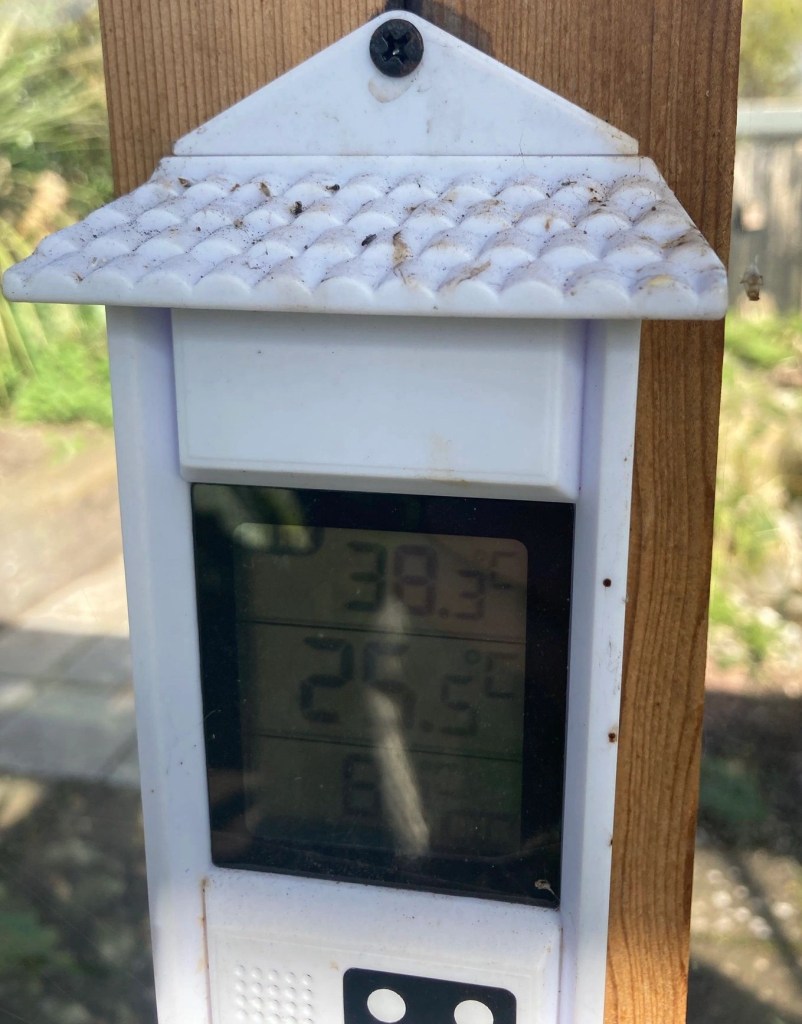
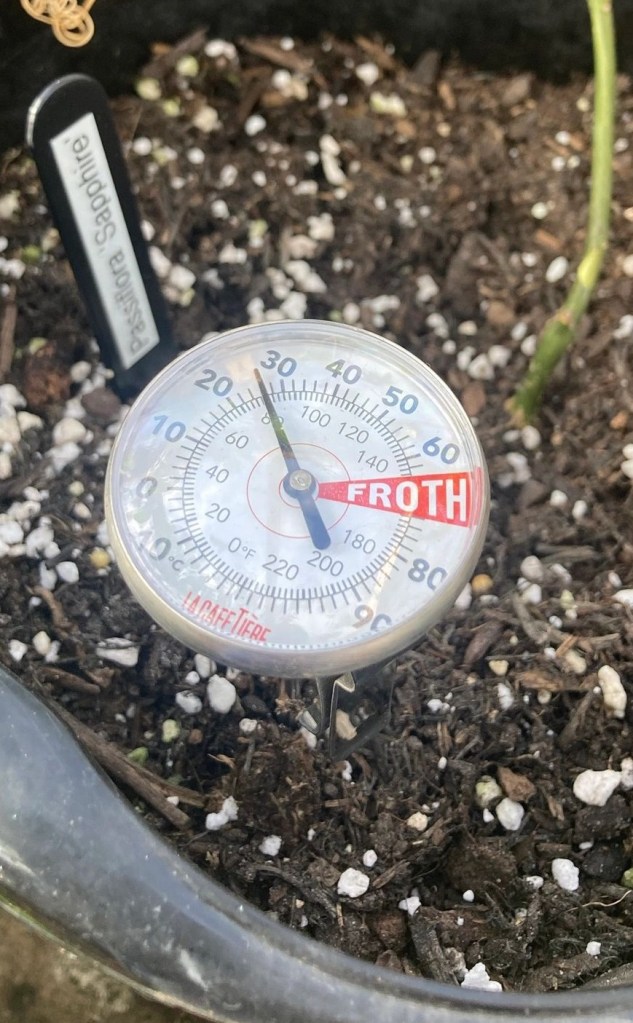
Firstly we need to get to the root of the problem, quite literally as it is the roots that are the weak link. In the Northern Territories of Australia they are farmed commercially but are grafted onto a more resilient rootstock (passiflora edulis var flavicarpa) and this makes a huge difference. The problem appears to be that temperatures in excess of 25C activate fungal spores in the soil which in turn produce byproducts which are toxic to the roots. (As it turns out some passionflowers are sensitive to fungi that become active below 10C making them difficult to overwinter, but that’s another story for another blog).
Rather than using P. edulis var flavicarpa we need to use something that is quite happy in all UK conditions and what could be better than the hardy and heat resilient P. caerulea. It also has the advantage of being readily available.

This early in the year there are 3 ways to get hold of P. caerulea. Either get hold of some seed, soak in warm water for 48hours then sow on window ledge or propagator, or you might find a plant in a garden centre or thirdly a friend might have one in their conservatory that you can take cuttings from. Later in the season someone might have one in their garden.

Next you will need to eat a purple passionflower from the supermarket, keep and rinse some of the seed and sow in the same way.
I am about a year ahead of you. I sowed seed in April/May last year. By early September I had reasonable sized plants of both sorts. I then did something that will sound a bit scary if you’ve not done it before. I cut off the top 3inches or so of the P. edulis and grafted it onto the caerulea. I did a video of a previous graft I did with different passionflowers a couple of years ago and I did exactly the same thing this time. (outcome of the original grafting to follow in a few weeks):
At the end it should say that you place a big clear plastic bag over it and put it somewhere warm out of direct sunlight misting a couple of times a day for a few weeks
And the story so far?


As of late March I’m already starting to see that the original P. edulis on its own roots is beginning to suffer although I have moved it into the shade. However the two grafted ones, although smaller, are not at all bothered and are growing on in full sun.

I will keep you updated of progress. Meanwhile, if you fancy a go, now is the perfect time to get your seeds and start growing.
 Devon Subtropical Garden