These plants are all hardy and thrive for us if left permanently outside
Bear in mind that ‘Is it hardy?’ is the wrong question. What you really mean is ‘Is it worth growing outdoors?’. The answer will depend on your soil, climate , exposure to wind and other factors. Hopefully this section will give you some help. However the top tip is to take cuttings before leaving your only plant out to overwinter for the first time. See propagation section.
There are a number of passionflower species that are hardy and in recent years some very smart breeding work has been carried out with polyploid hybrids by Myles Irvine, a now retired gym owner, and other very clever people who have dedicated a lot of time and money to creating hybrids that have big colourful flowers and are, above all, hardy. Some of these have recently become available at mainstream nurseries and will, I’m sure, mark the start of a new era in passionflower cultivation in the UK and around the world. We have even had a go ourselves and have, by pure fluke, come up with one which will soon be registered.
The hardiest passionflowers available in the UK are P. caerulea in various forms, P. ‘Snow Queen’, P ‘Betty Myles Young’, P ‘Damsel’s Delight’ and P x colvilii. If growing them outside dig a nice deep hole early in the season, use mycorrhizal fungi, water with a whole can once a week for first season and protect with fleece first winter. If your plant is very small then grow on under cover and plant out in year two. These precautions should help the less hardy ones settle, and give the really hardies a great start.
Passiflora caerulea
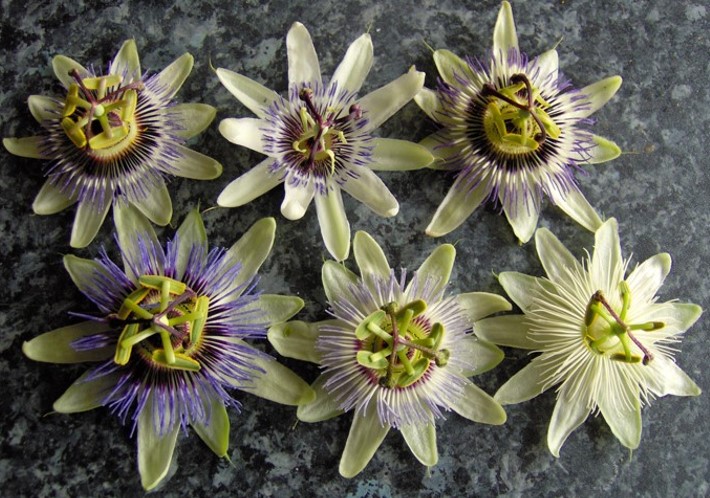
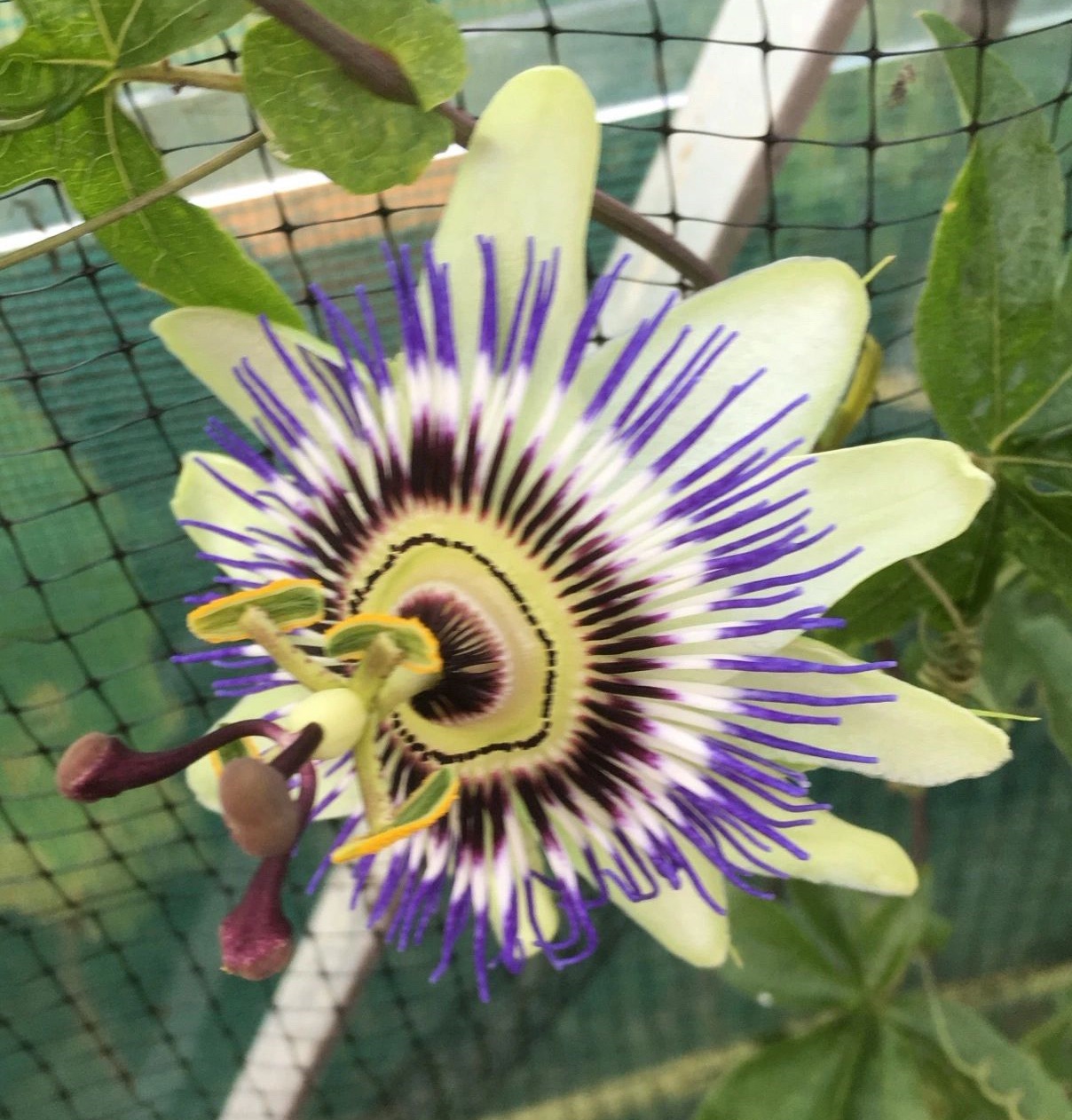
Passiflora caerulea is the most well known species. It is hardy and in many ways one of the most useful since it has been used extensively in breeding giving the offspring greater resistance to cold and is also a brilliant choice as a rootstock when grafting the more tricky passionflower (see section on grafting).
It is also very varied having a wide variety of colourations as seen above including the ivory white P. caerulea ‘Constance Eliott’ and pure white P. caerulea ‘Avalanche’. Once settled it can become quite invasive as its roots burrow deep down and away from the parent. This makes it all but impossible to move once it has been in place for a couple of years; at his point it is best to take cuttings and start again.
Passiflora ‘Betty Myles Young’
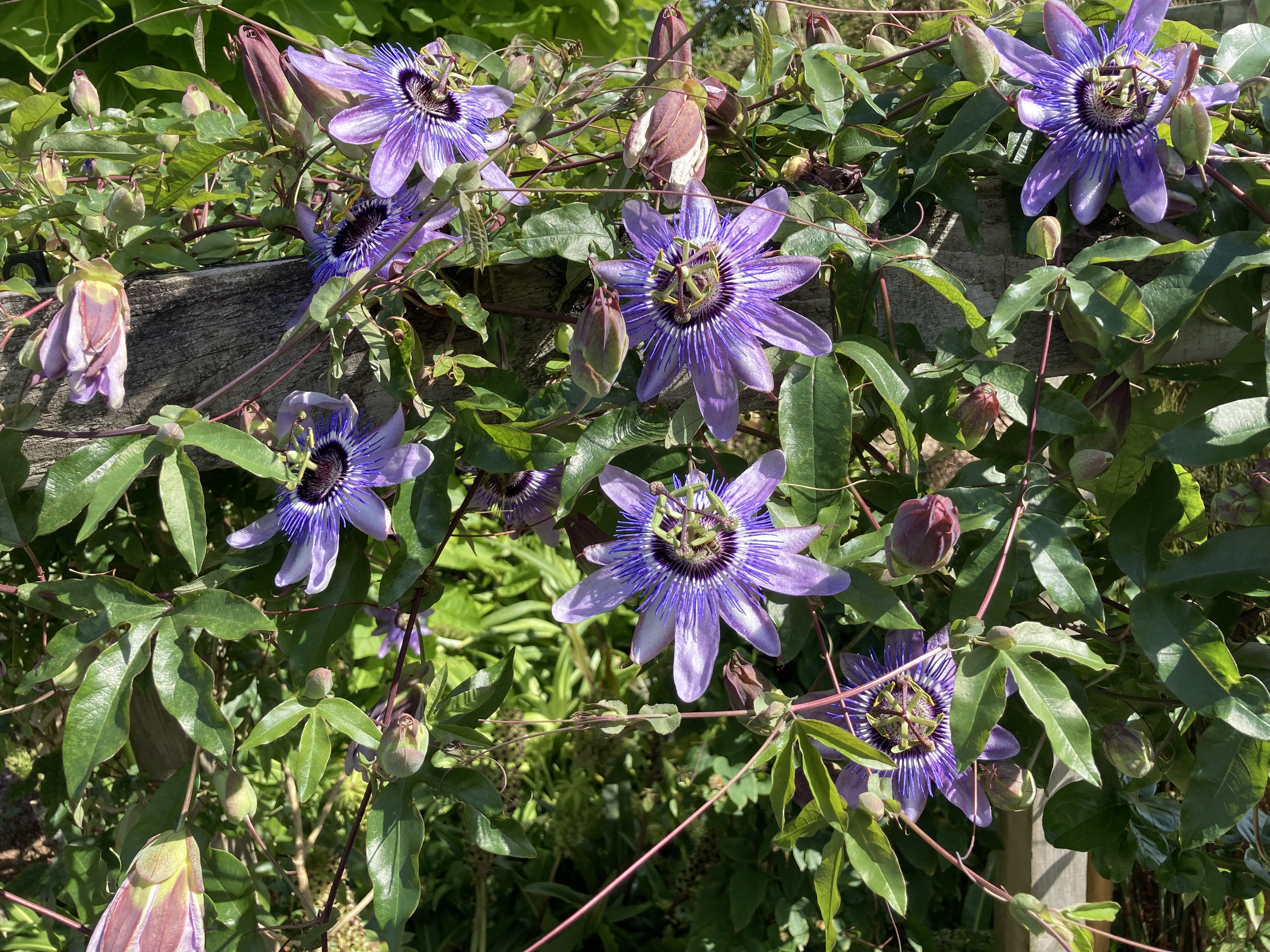
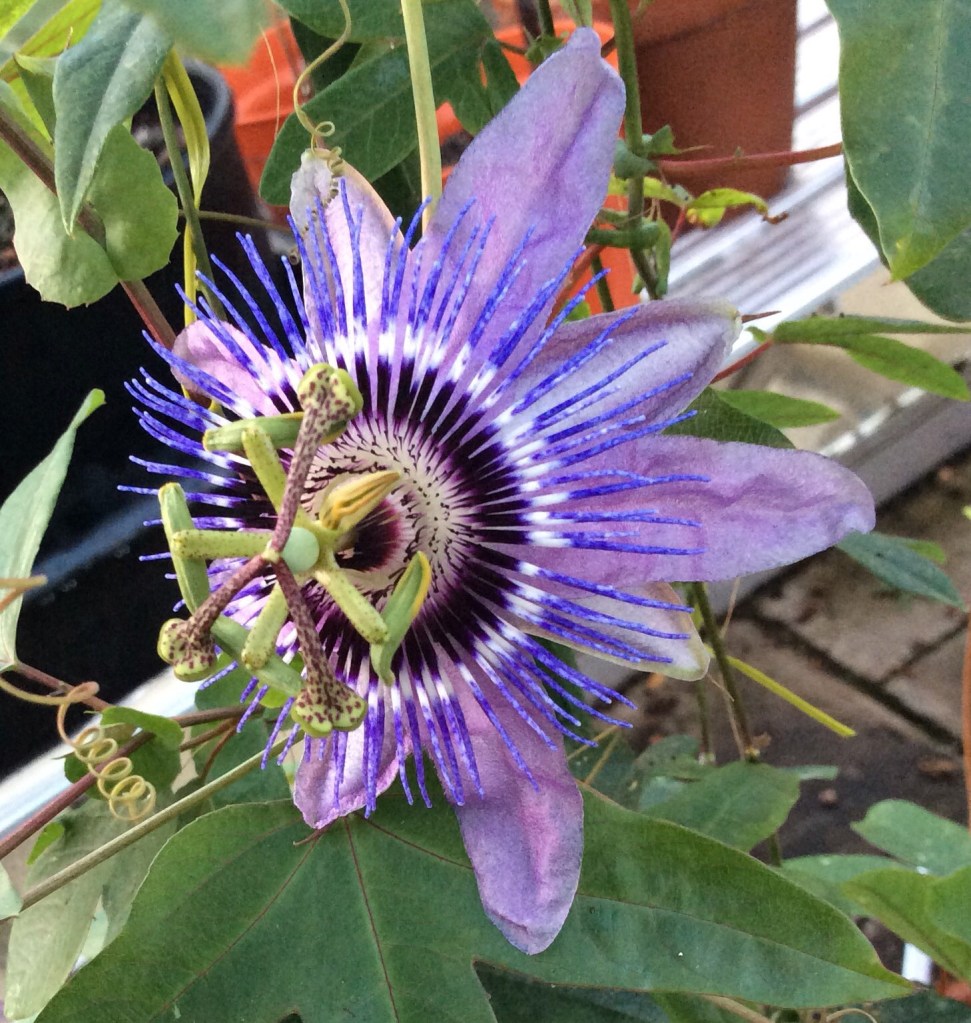

Passiflora ‘Betty Myles Young’ is a complex polyploid (extra set(s) of chromosomes) hybrid from Myles Irvine.
Passiflora ‘Snow Queen’
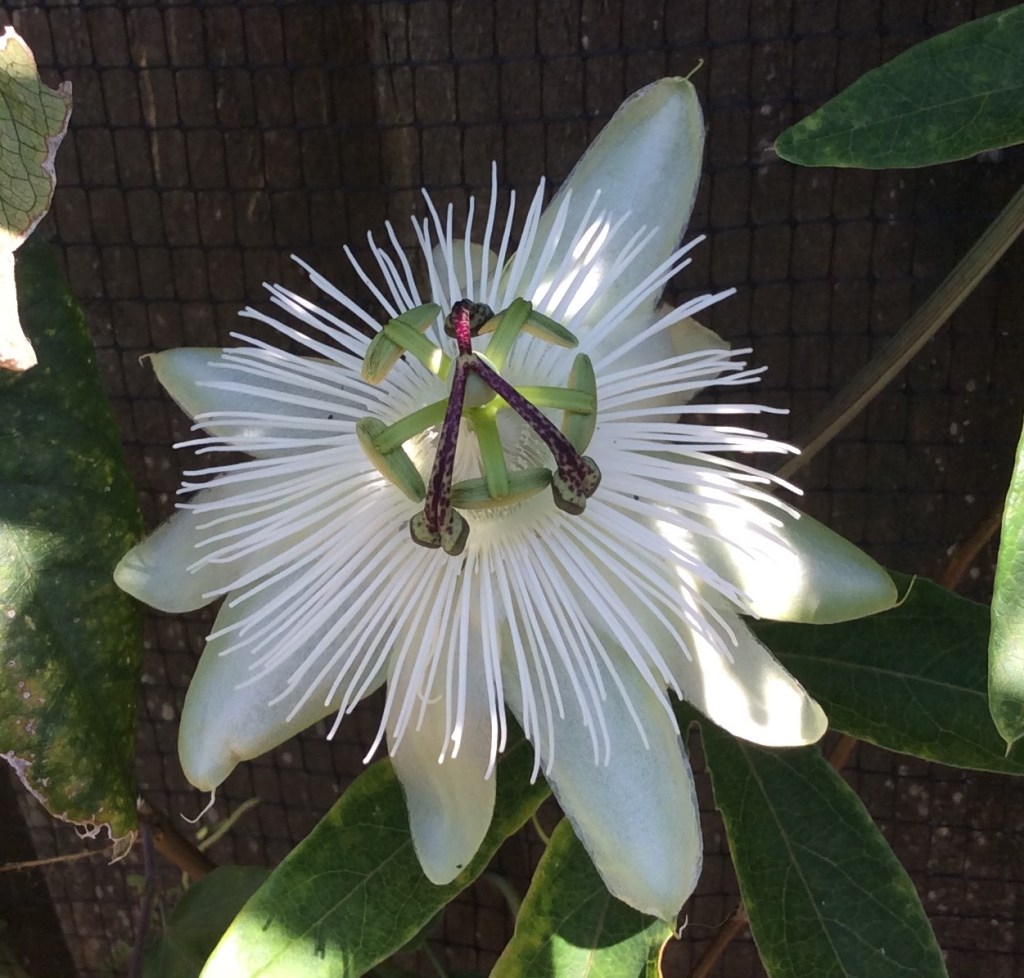
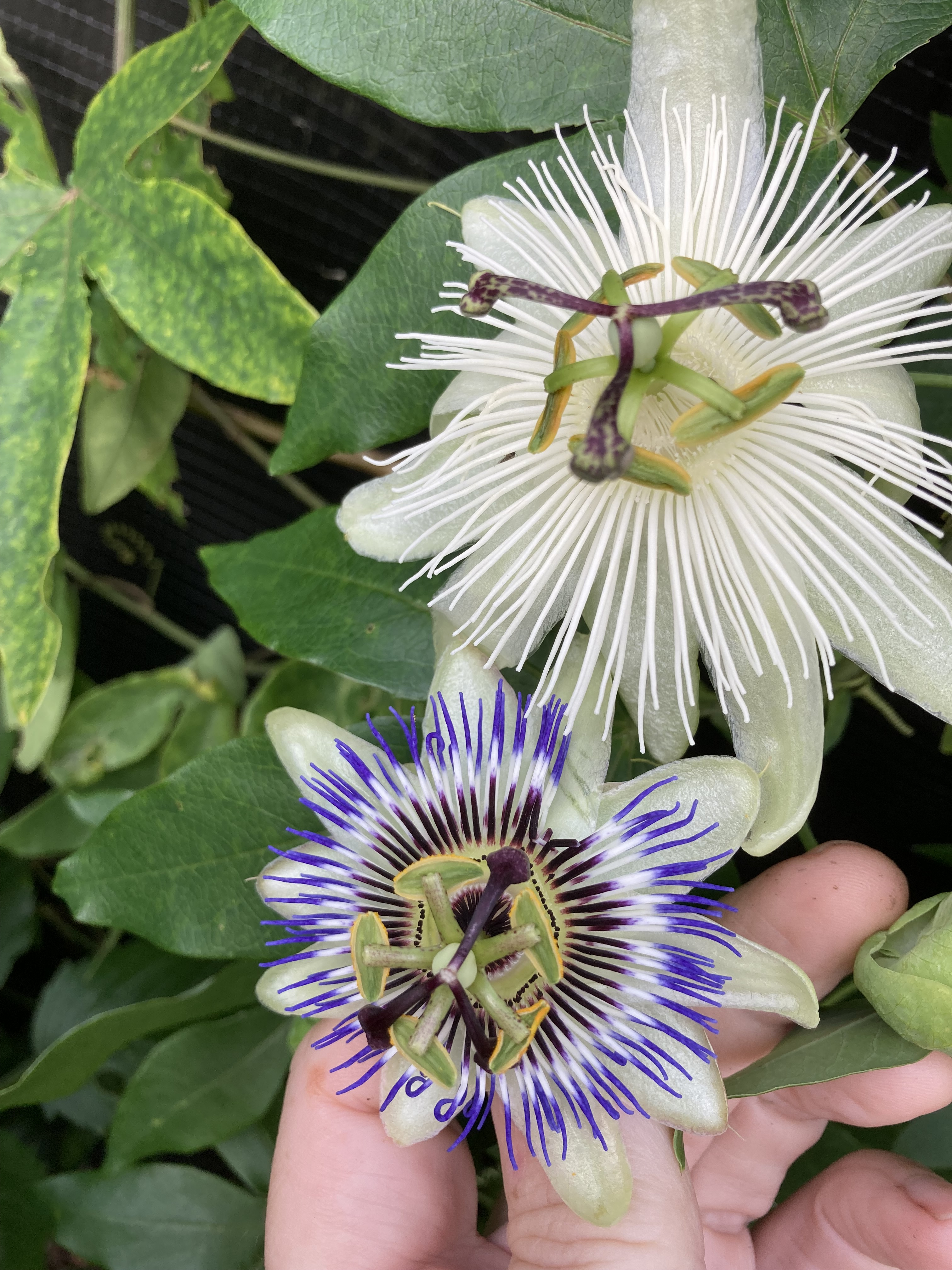
Passiflora ‘Snow Queen’ is another polyploid hybrid from Myles with big pure white flowers which is proving a best seller in garden centres. It is healthy, very quick to cover a fence and exceptionally free flowering.
Passiflora ‘Damsel’s Delight’
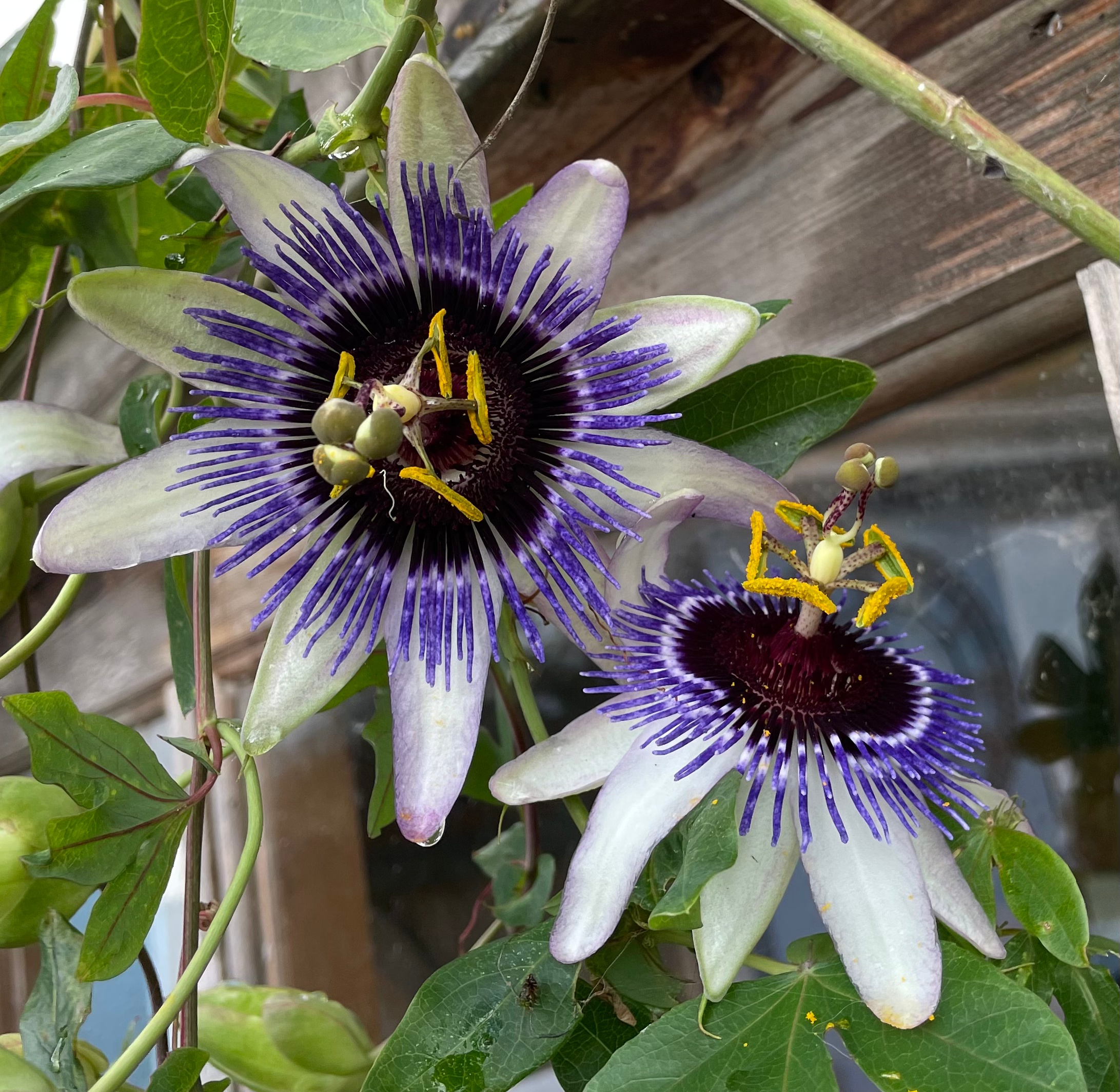
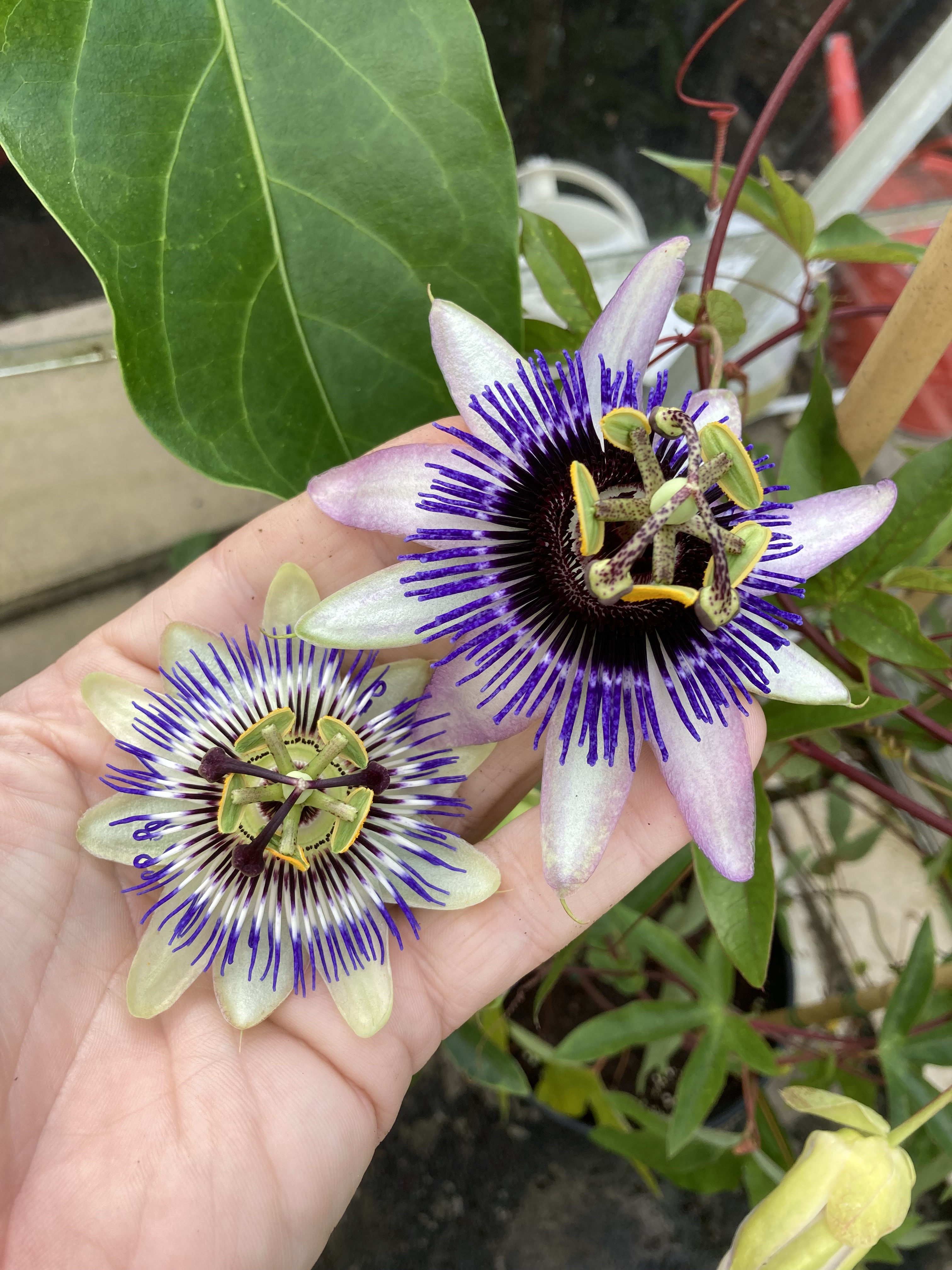
Passiflora ‘Damsel’s Delight’ is another of Myles’s polyploid hybrids. All 3 featured here are quite complex and include P. caerulea in their parentage. They are hardy, free flowering, robust and vigorous. They are the result of a lot of selection and testing and are some of the best hybrids currently on the market. Highly recommended.
Passiflora x colvillii
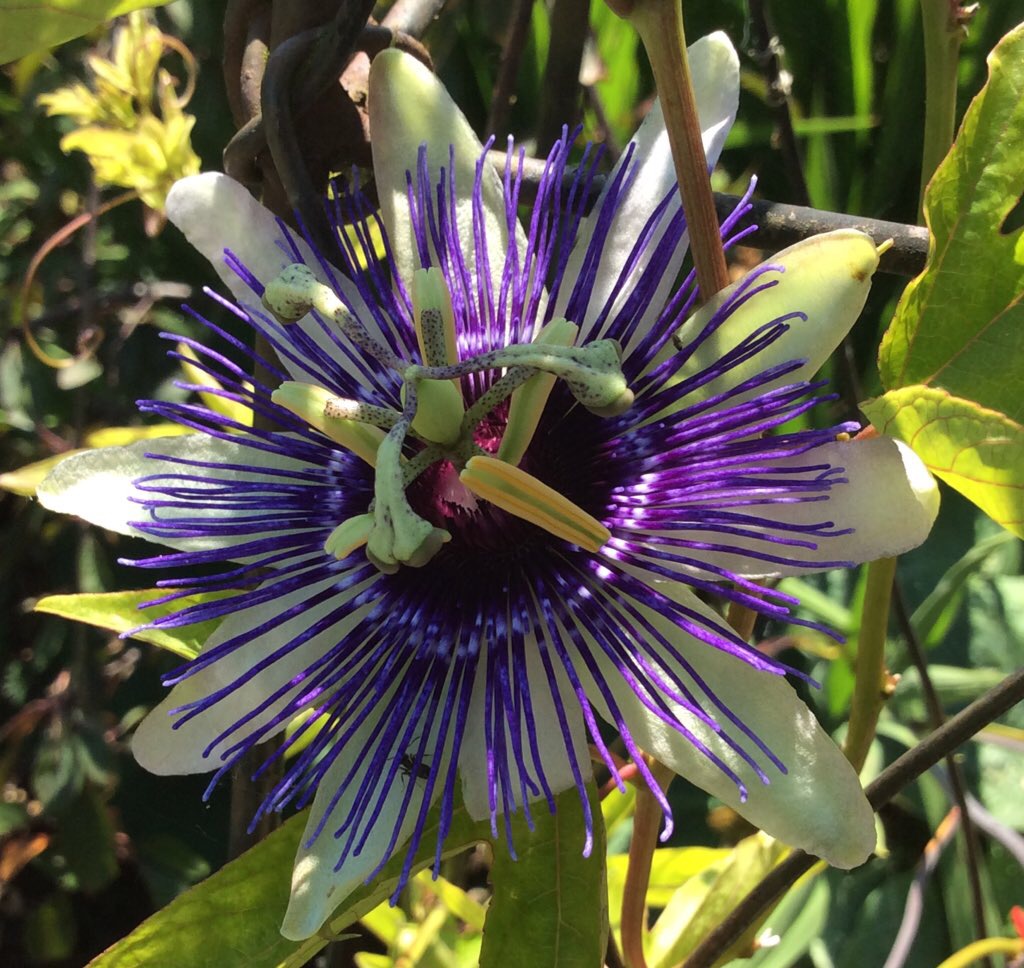
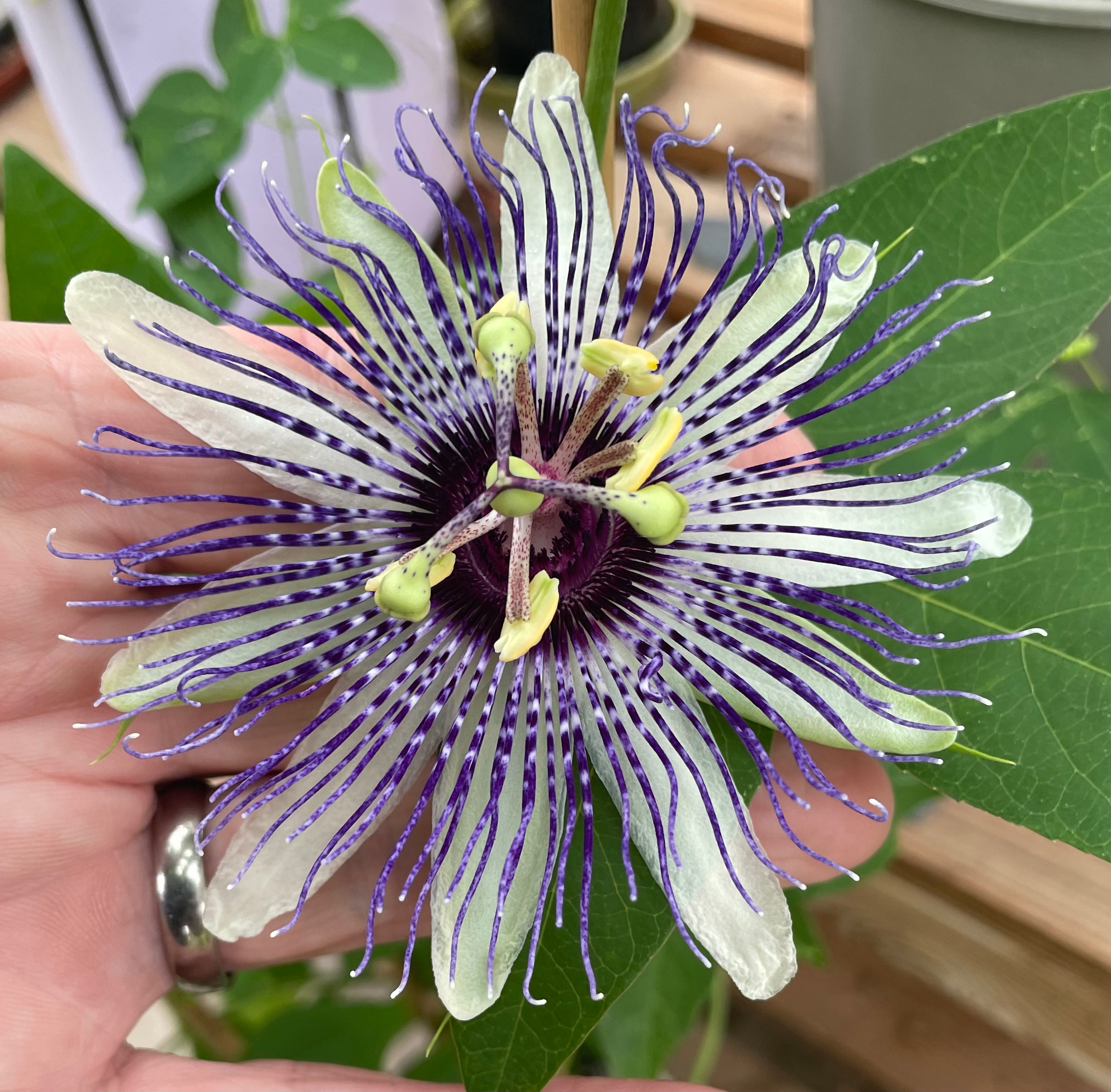
Passiflora x colvilii. This cross, dating from 1824, has been done many times and they are a varied bunch. Coming from hardy parents (caerulea and incarnata) it is pretty hardy once established. The second one is our attempt which is P. incarnata (seed raised form) x P. caerulea ‘Avalanche’ It is currently being assessed for hardiness.
Passiflora ‘Fata Confetto’

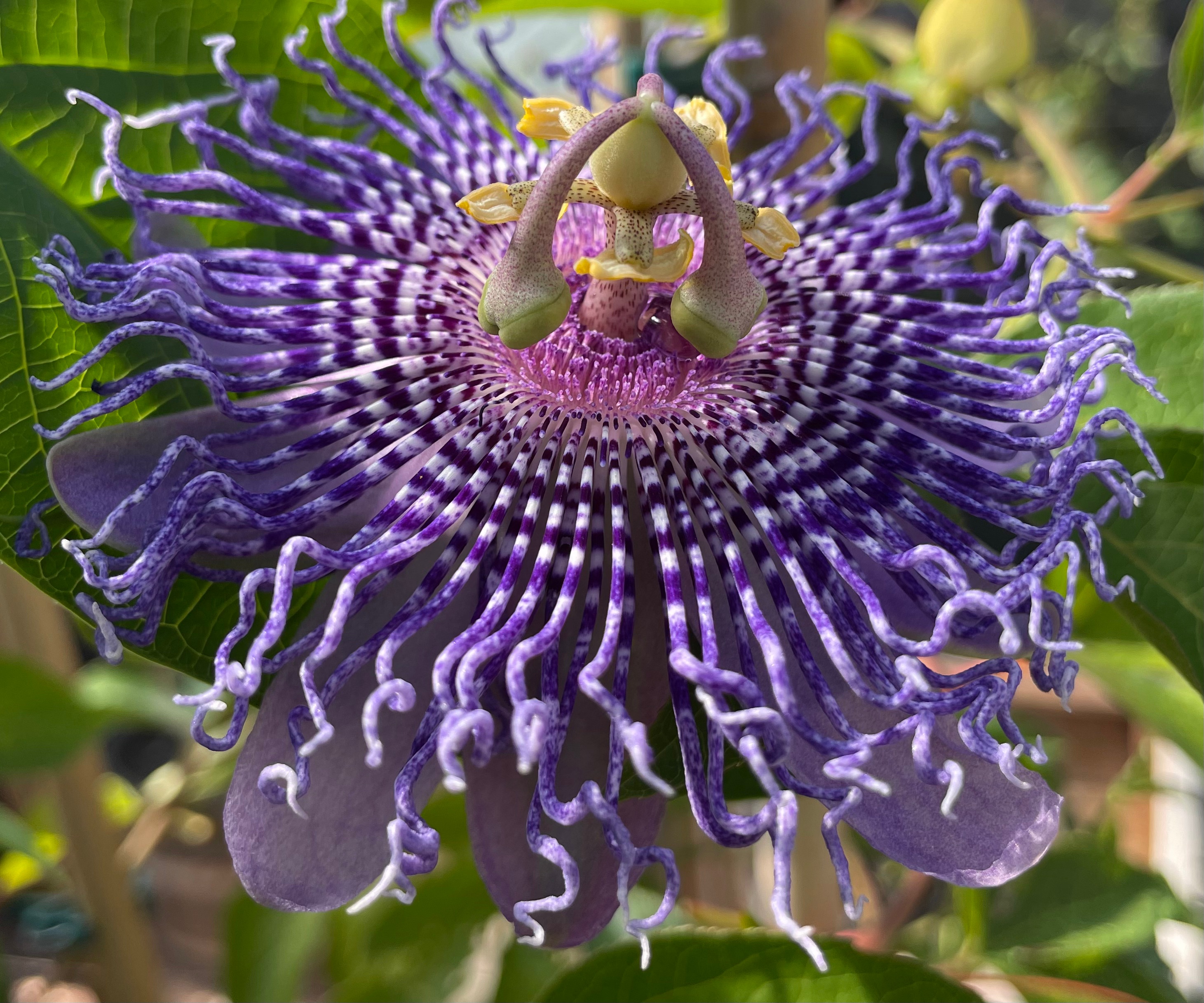
Passiflora ‘Fata Confetto’ is a complex hybrid from Mauricio Vecchia with lovely scented flowers which has the reputation of being hardy down to -10C but which we have found to be reluctant to start into growth until quite late in the year. Like one of its parents, P. incarnata, it is probably best bedded out for the summer and brought back into the greenhouse to make an early start.
Passiflora incarnata
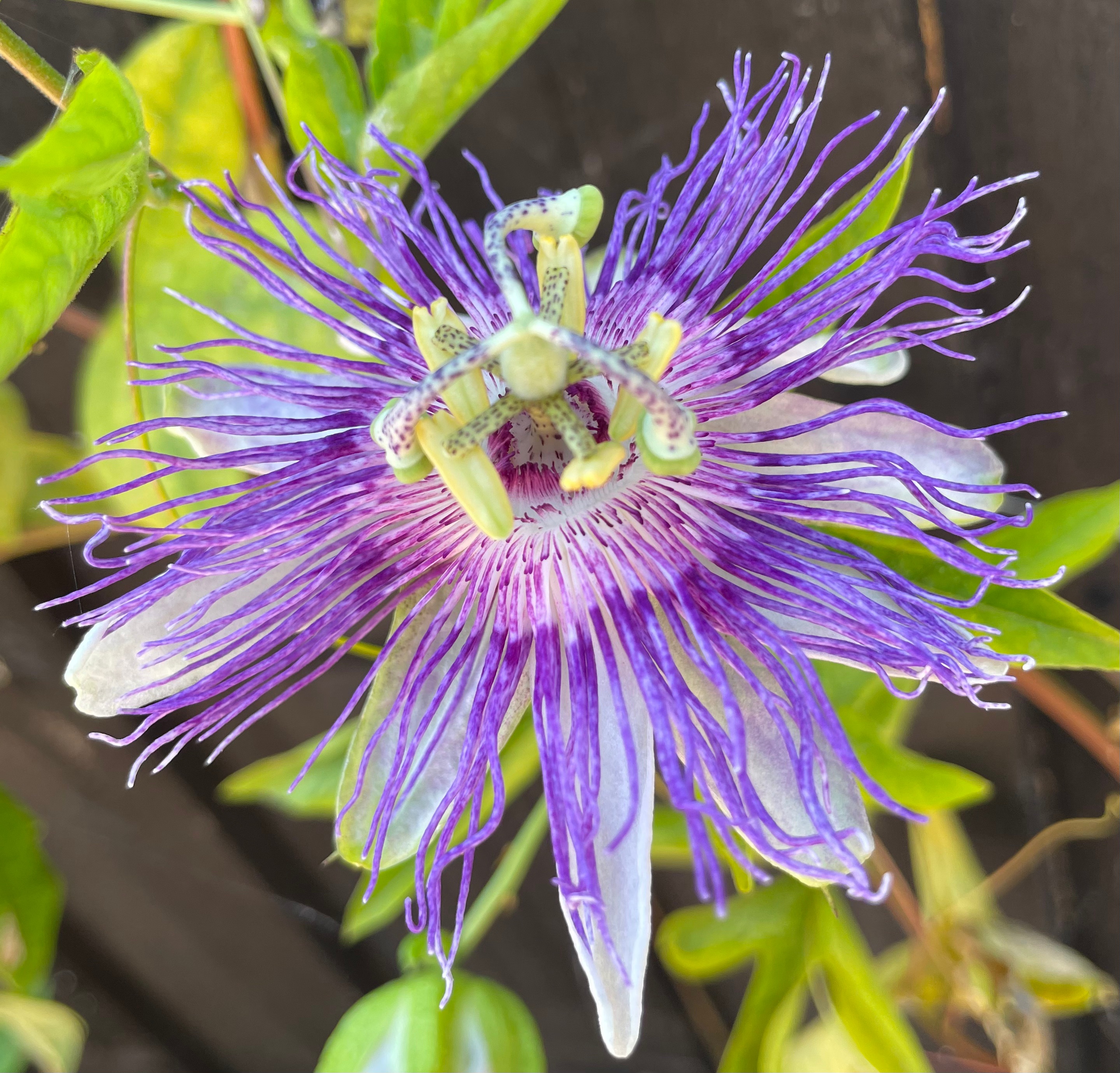
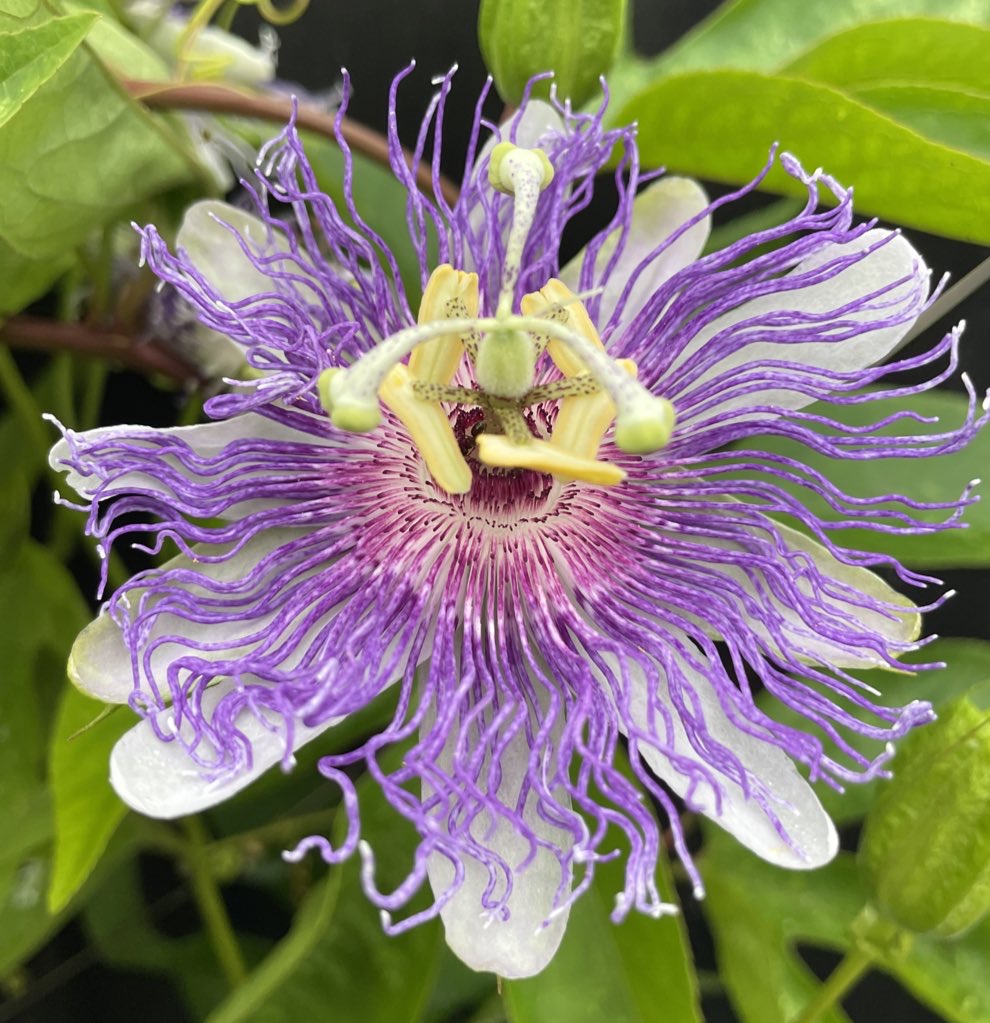
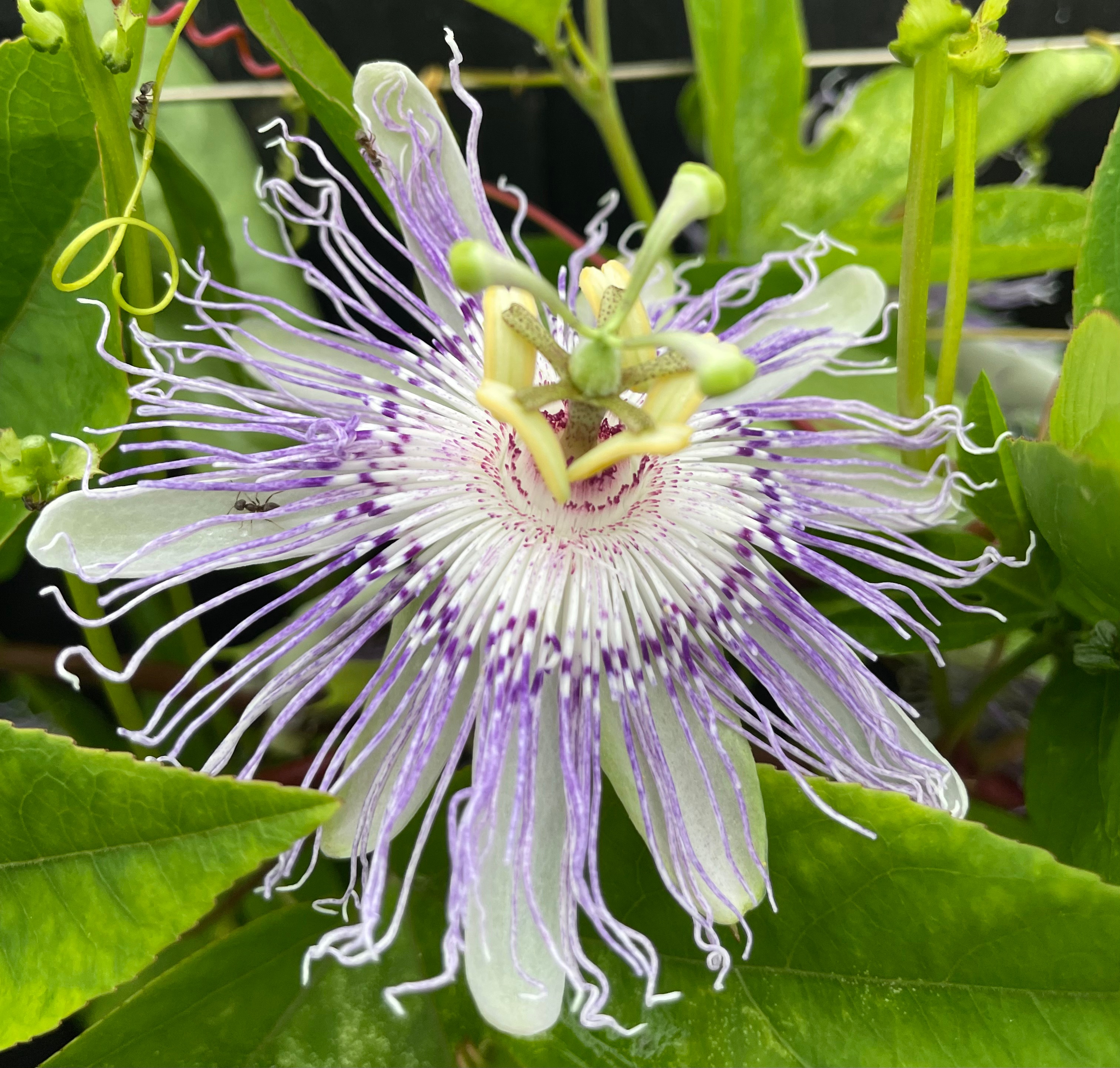
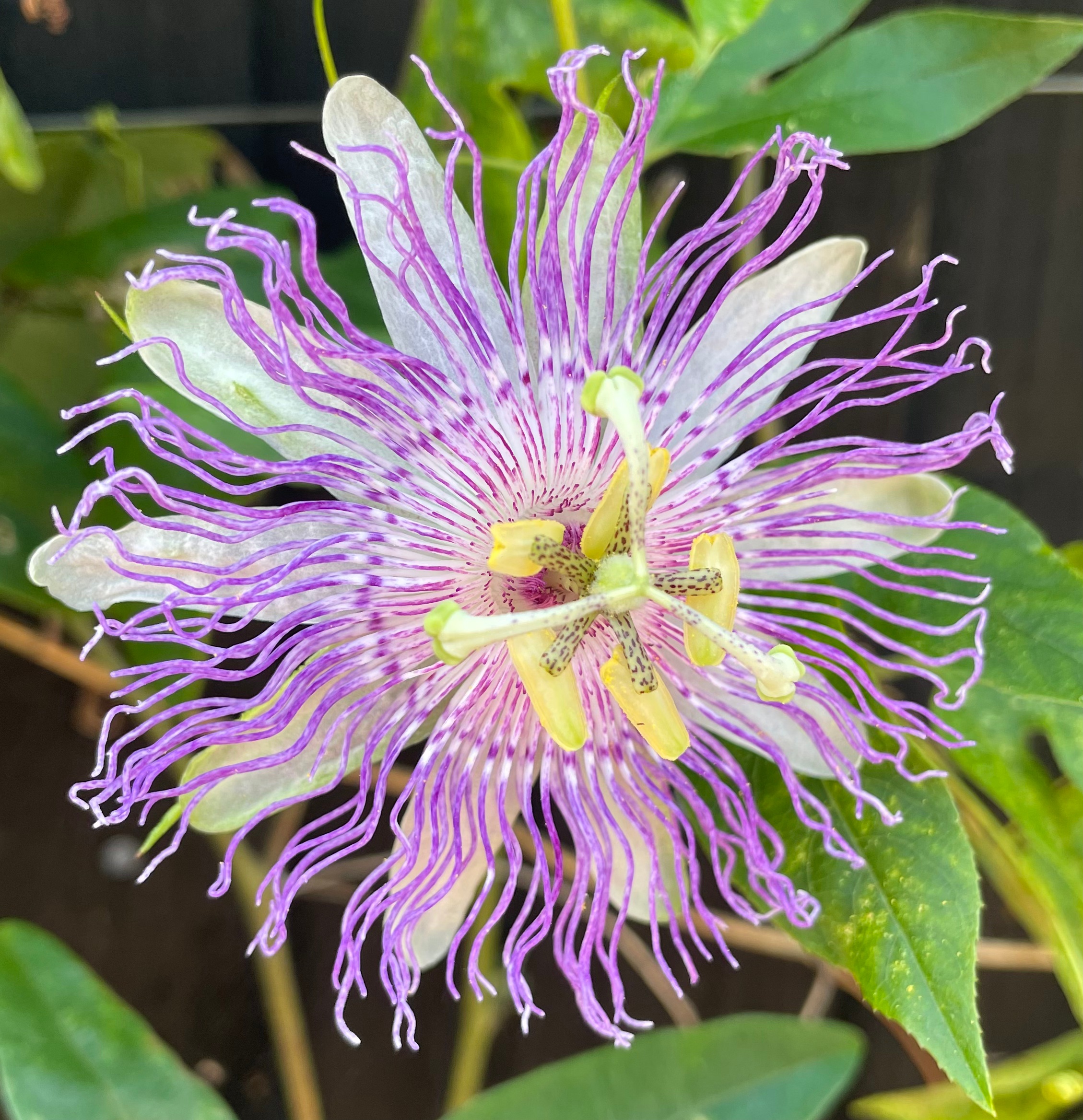
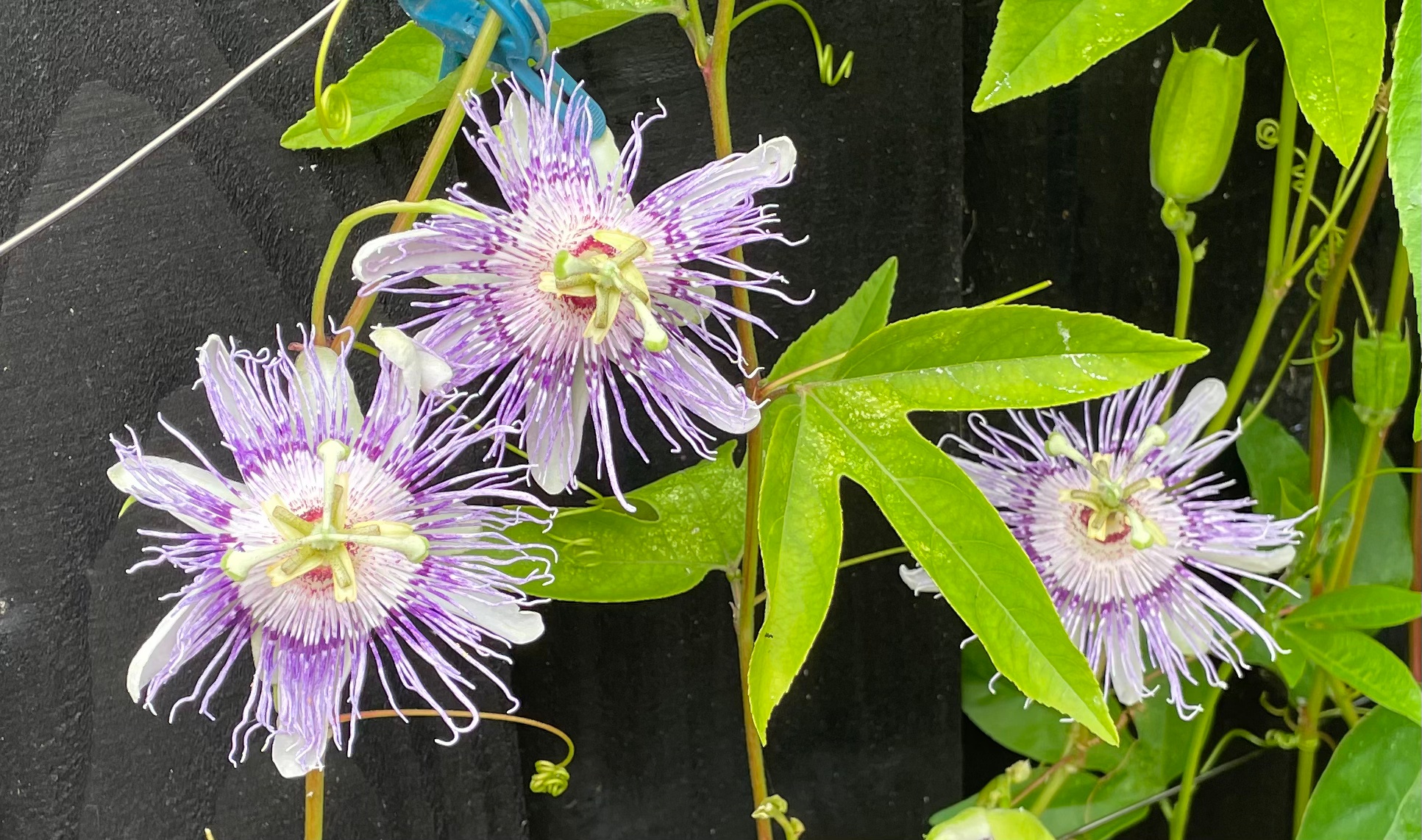
Passiflora incarnata is a very varied species (see above). It grows readily from seed is hardy, scented and crosses happily with other species. However although hardy it come back late in May or later and often too late to flower. It is best bedded out for the summer then brought back in to give it an early start (see next group). It can also be grown as a half hardy annual as it gets going quickly and will flower as early as mid May.
Passiflora tucumanensis
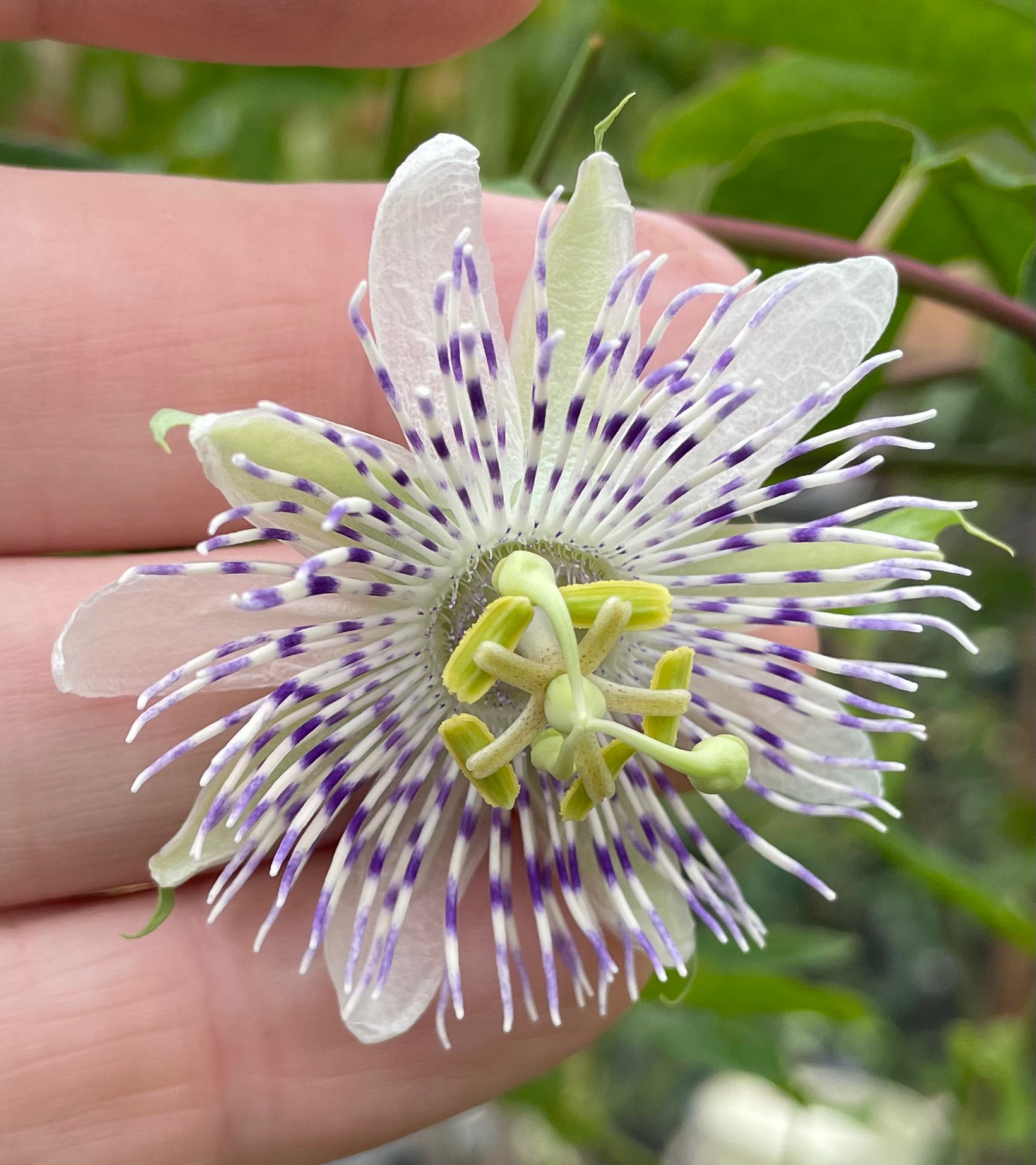
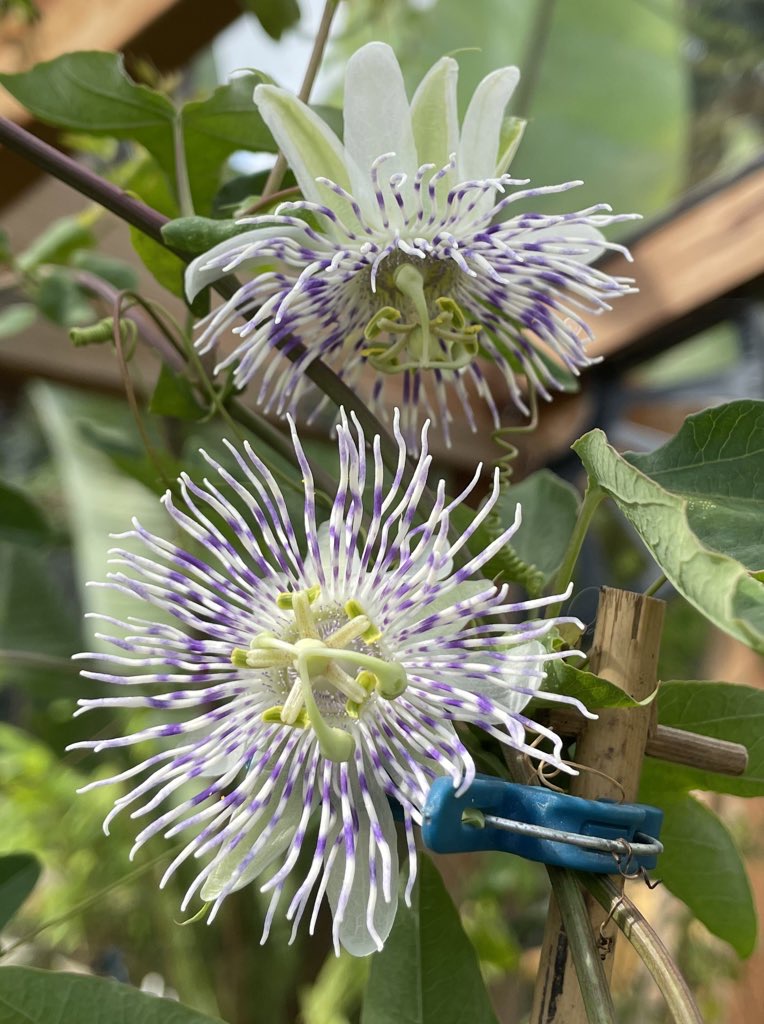
Passiflora tucumanensis This is a quite small flowered, pretty and lightly scented one. Allegedly hardy to -10 but we use it to scramble through the greenhouse roof. I will be taking cuttings and testing it for hardiness in 2026.
Passiflora x violacea
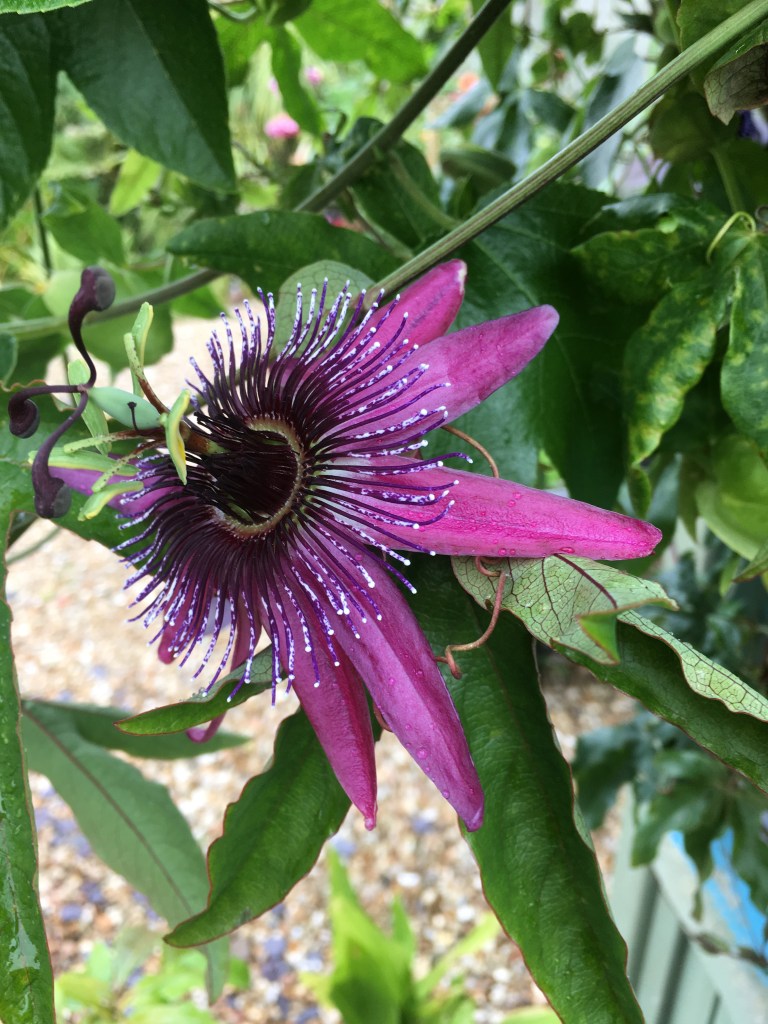
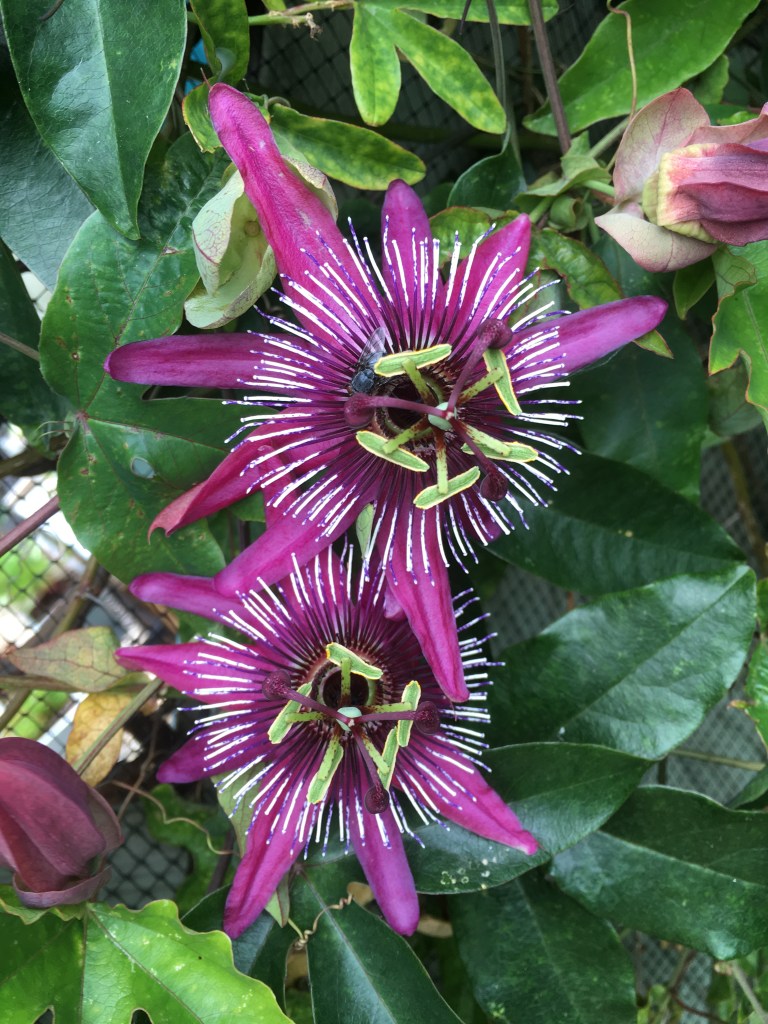
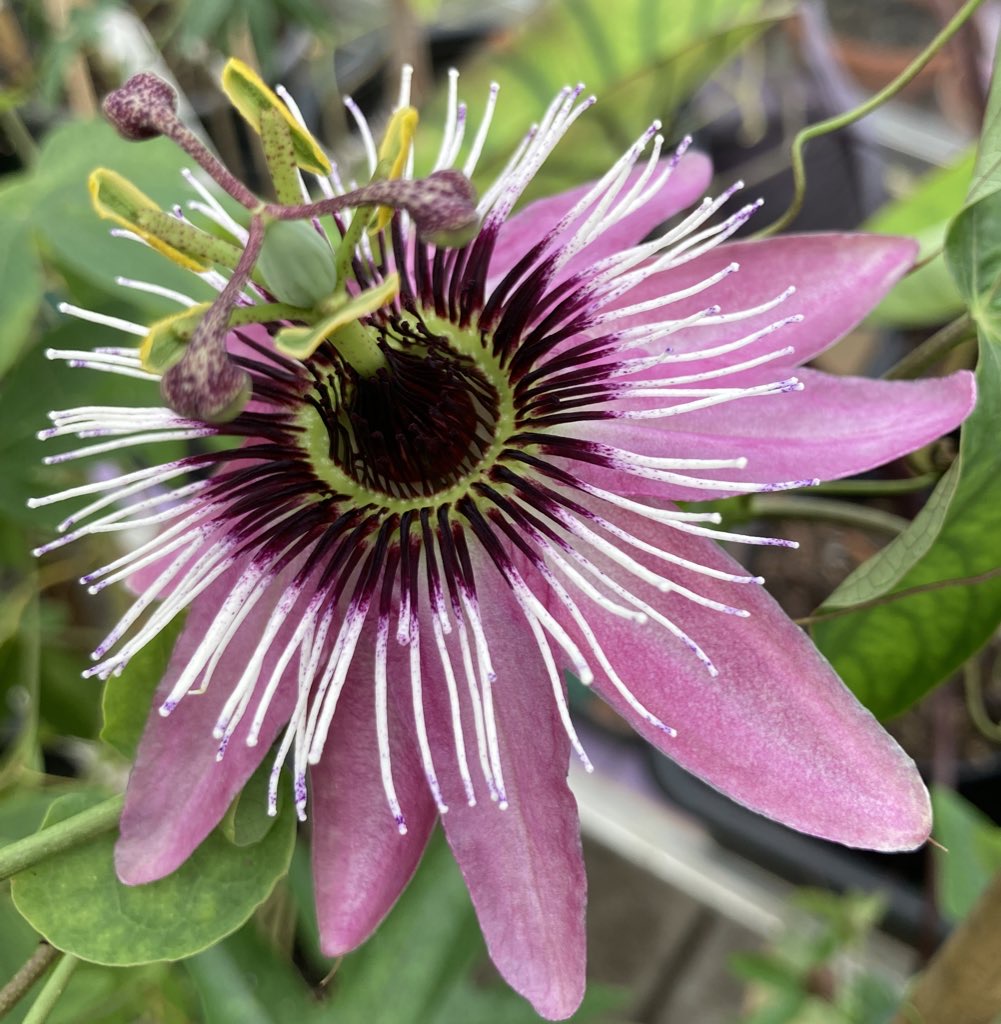
Passiflora x violacea had survived quite well for us and does flower if left outside. However it also perished in some of our wetter and colder years so we don’t grow it outside currently. We recently acquired a form called ‘Atropurpurea’ from John Vanderplank and will be experimenting with that for hardiness.
This cross first took place in Fulham in 1821 and has been repeated many times since so that there are a number of different cultivars going by this name. The form pictured is quite close to the original by Mr Milne of Fulham, however the one you are most likely to get these days is P. x violacea ‘Victoria’ which is more free flowering but less striking and less hardy.
Passiflora ‘Amethyst’
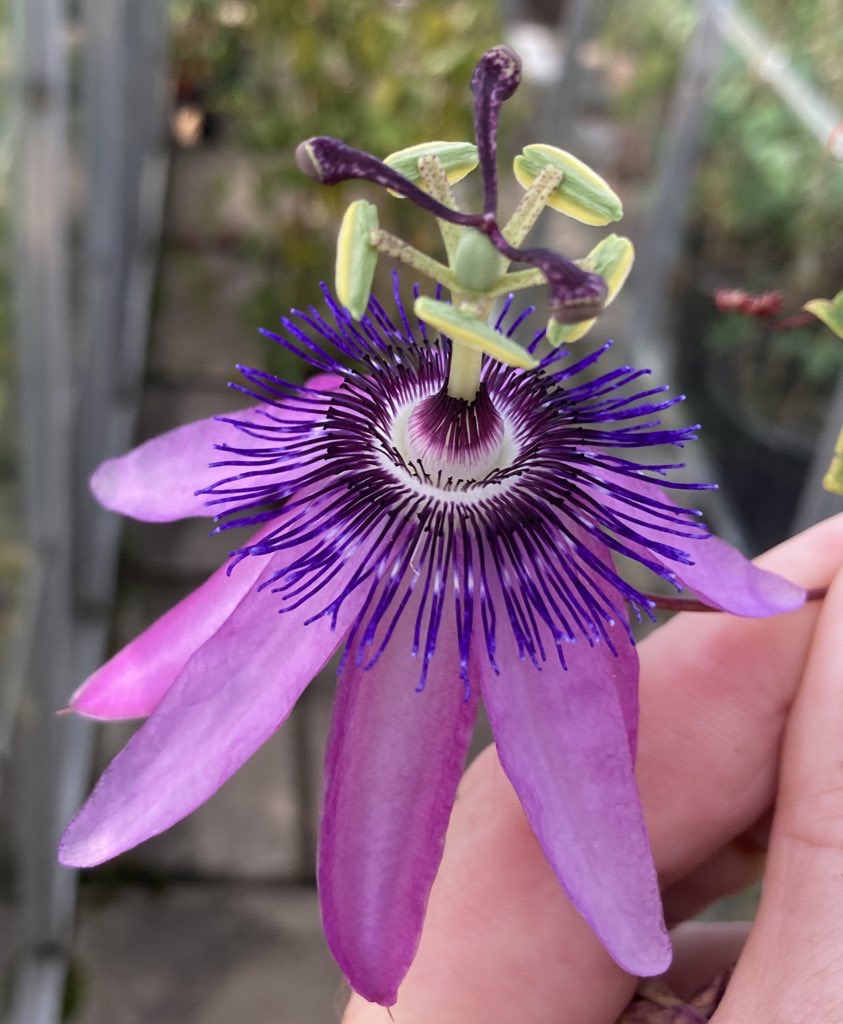

Passiflora x kewensis ‘Amethyst’ (or just P. ‘Amethyst’ to its friends): is a lovely coloured and free flowing hybrid (often confused with P. ‘Lavender Lady’ and frequently labelled amethystina, both of which are separate plants). It is hardy down to about -8 or so if allowed to get its roots deep in the first year and given a sheltered spot. The x kewensis is the result of recent research and it had to take the name from a very lovely hybrid now called ‘Kew Gardens’. The rules of plant naming are simple in principle but can be a tad confusing (think of them as being a combination the offside and away goals rules in football). Easiest perhaps to just refer to this as Passiflora ‘Amethyst’
P. ‘Amethyst’ along with P. ‘Victoria’ have for many years (until the arrival of Myles Irvine’s hybrids) been the best selling passionflowers in the UK after P. caerulea and P. caerulea ‘Constance Eliott’ for many years and deservedly so. They are both easy, borderline hardy and very free flowering. A great place to begin if you are starting a collection
 Devon Subtropical Garden